This California driver’s license written test question bank contains a total of 300 questions. The correct answers are marked in red. We hope this helps with your California driver’s license written test.
1. If you are driving through a construction zone, what should you do?
- a. Slow down and watch for workers on the road.
- b. Sound your horn to alert pedestrians and vehicles nearby.
- c. Stay focused and drive carefully.
- d. Speed up to avoid disrupting the workers.
2. What should you do when making a right turn and encountering a bicycle lane?
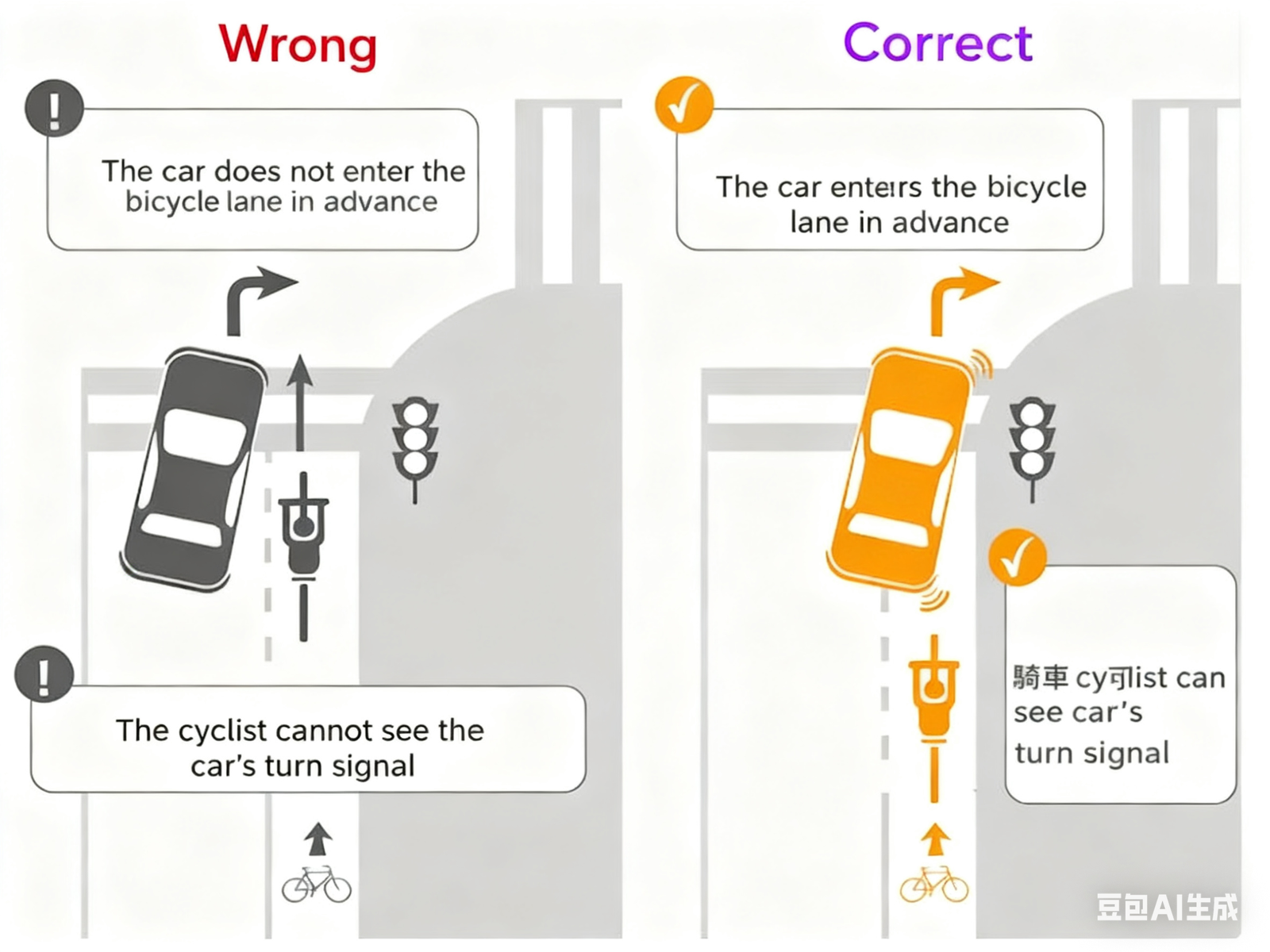
- a. Never enter the bicycle lane.
- b. Stop before turning, then enter the bicycle lane after confirming it’s safe.
- c. Merge into the bicycle lane before making the turn.
- d. Sound your horn to alert pedestrians near the intersection, then turn.
3. If the traffic signal at an intersection is not working, how should you, as a driver, respond?
- a. Come to a stop at the intersection, then proceed when safe.
- b. If your vehicle arrives first, you have the right-of-way.
- c. Slow down; no need to stop completely.
- d. Take a detour to avoid the intersection.
4. You are driving normally and see a pedestrian crossing the road, but not at a crosswalk. What should you do?
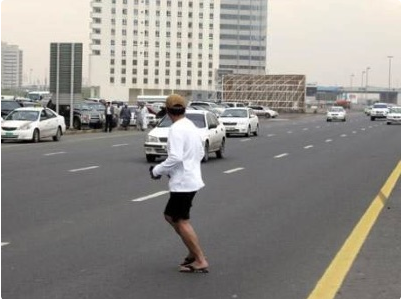
- a. Sound your horn, warn the pedestrian, and continue driving.
- b. Carefully drive past the pedestrian.
- c. Change lanes and speed up to pass in front of the pedestrian.
- d. Stop and yield to the pedestrian.
5. When should you wear your seatbelt?
- a. Only when the road is rough and the vehicle is bumpy.
- b. Only when driving a luxury vehicle worth more than $50,000.
- c. Whenever the vehicle is equipped with seatbelts.
- d. Only when police cars are patrolling nearby.
6. Under what circumstances should you maintain a greater distance from a large truck?
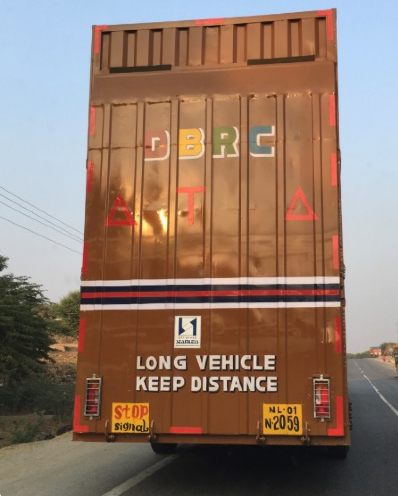
a. When you see another vehicle wanting to change lanes.
b. When you see the truck is about to stop.
c. When you see a vehicle in the next lane wanting to overtake.
d. When you see a vehicle in the next lane wanting to park.
7. When the road is slippery from rain, what should drivers pay attention to?
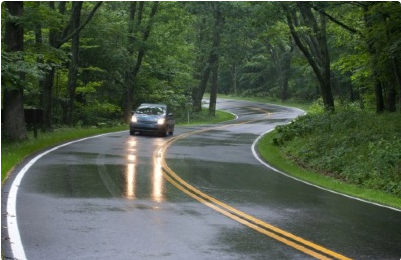
- a. Sound the horn occasionally to warn pedestrians.
- b. Avoid sharp turns and sudden braking.
- c. Replace old tires to avoid loss of traction.
- d. Do not maintain too much distance from the vehicle ahead.
8. Which of the following situations is most likely to cause a traffic accident?
- a. Vehicles on the road are traveling at similar speeds.
- b. Vehicles in the fast lane are moving faster.
- c. Individual vehicles traveling too fast or too slow.
- d. There are multiple large trucks in the traffic flow.
9. Your car is initially parked at the roadside. What should you pay attention to when you want to drive away?
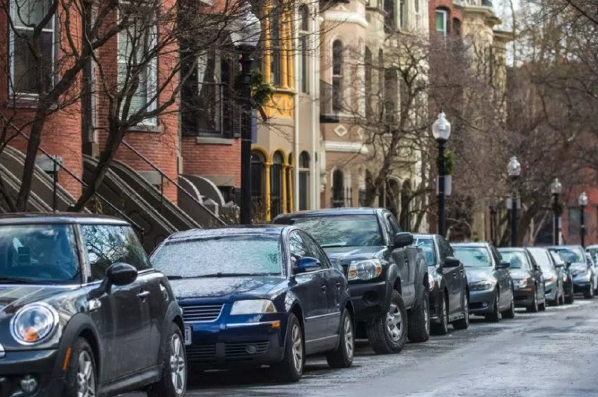
- a. Do not drive too fast for the first 200 meters after starting.
- b. Look for a suitable gap and time to merge into traffic at an appropriate speed.
- c. Always sound your horn to alert other drivers.
- d. Wave your hand out the window to alert other drivers.
10. After passing a vehicle and wanting to return to your original lane, how do you determine if it’s safe to change lanes?
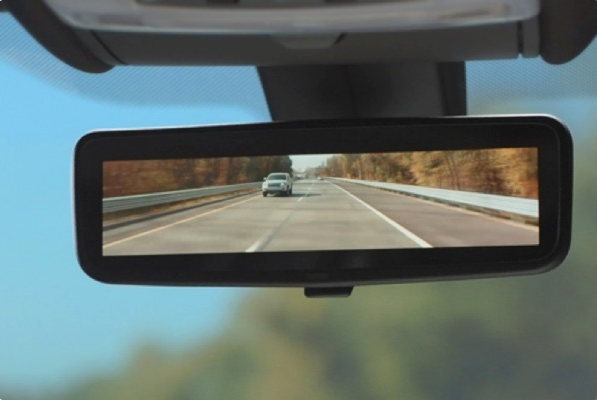
- a. Check the side mirror; if you can no longer see the passed vehicle, it is safe.
- b. Check the rearview mirror; when you can see both headlights of the passed vehicle clearly, it is safe.
- c. It is safe as long as you use your turn signal when changing lanes.
- d. It is safe as long as you accelerate while changing lanes.
11. Under which of the following conditions should you turn off your high-beam headlights or dim your headlights?
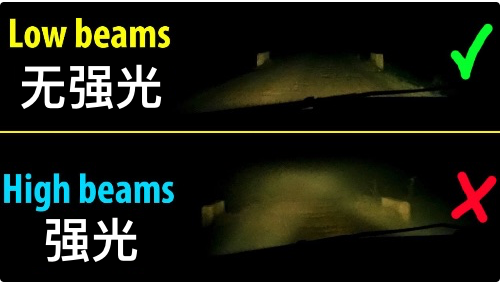
- a. When you are following another vehicle and are within 300 feet (approx. 91m).
- b. When a vehicle is following you and is within 300 feet (approx. 91m).
- c. When there are other vehicles in the lane next to you.
- d. When driving on city streets.
12. If you see the following sign on the road, what should you do?
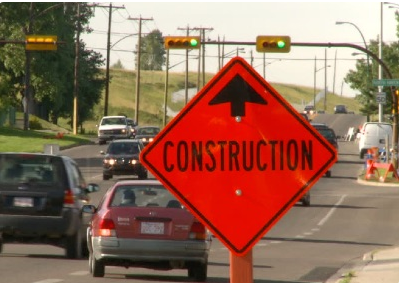
- a. Slow down immediately because the road ends ahead.
- b. There may be workers ahead; be prepared to yield.
- c. Maintain speed but switch to another lane.
- d. Stop immediately and make a U-turn to leave the current road.
13. Under what circumstances can you make a U-turn in a residential driveway?
- a. U-turns are never allowed in residential areas.
- b. Only on one-way streets.
- c. When no other vehicles are nearby.
- d. Only when there are two solid yellow lines on the road.
14. Under what circumstances must you agree to a blood alcohol content (BAC) test?
- a. When you have definitely been drinking alcohol.
- b. Anytime you are in the state of California.
- c. When you are involved in a traffic accident.
- d. When encountering a police checkpoint at night.
15. As shown, when a green arrow signal light is illuminated, you should:
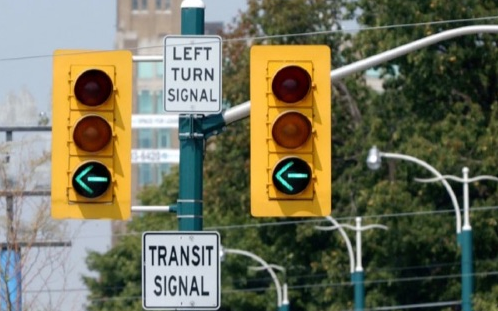
- a. Proceed in the direction of the arrow, but yield to any vehicles or pedestrians blocking your path.
- b. Proceed in the direction of the arrow, but only yield to pedestrians blocking the path.
- c. Do not proceed; wait for 4 seconds before going.
- d. Do not proceed; this signal is for pedestrians only.
16. What should you pay attention to when driving in dimly lit areas?
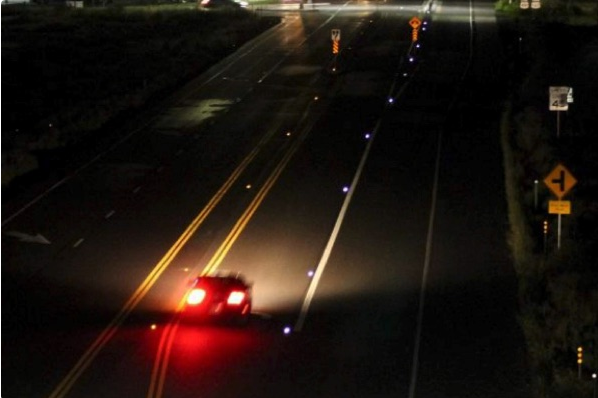
- a. Turn on your hazard lights so other drivers can see you.
- b. Reduce your speed so you can stop within the area illuminated by your headlights.
- c. Use high beams to see the road ahead better.
- d. Turn on the interior light so other drivers can see you.
17. If you see a yellow arrow painted on the road in a right-turn-only lane, what does it mean?
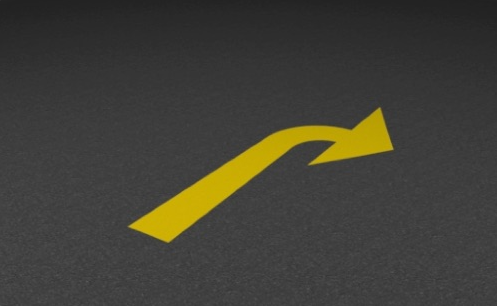
- a. Reminds you to observe and obey the traffic signal.
- b. Reminds you to watch for pedestrians when turning.
- c. Indicates the lane is closed; no turning allowed.
- d. Indicates construction ahead; turn and detour as soon as possible.
18. How should you yield the right-of-way to an emergency vehicle?
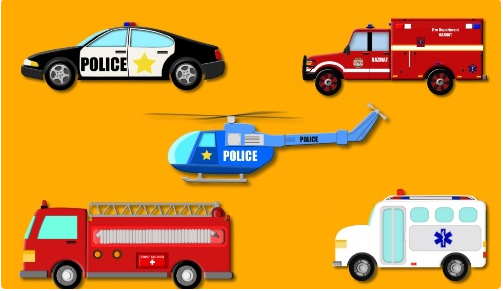
- a. Pull over to the right side of the road as far as possible and stop.
- b. Speed up and turn at the nearest intersection to leave the current lane.
- c. Stop immediately where you are.
- d. Slow down immediately until the emergency vehicle passes.
19. Why should you be extra cautious of motorcycles when turning?
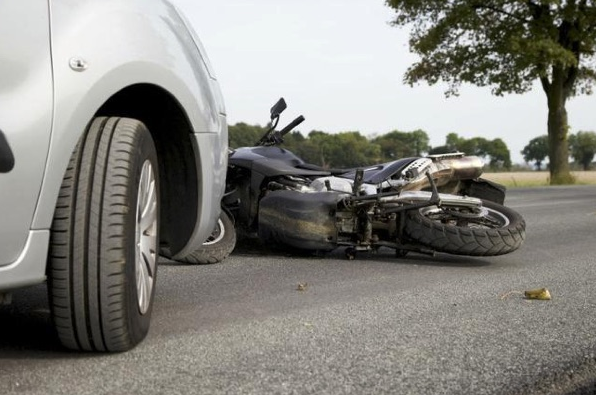
- a. Because they are too fast.
- b. Because they have the right-of-way for turns.
- c. Because they are small and can be hard to see.
- d. Because they frequently change lanes.
20. When you approach a railroad crossing and see the safety gates are lowering, but the train is still far away. The correct action is:
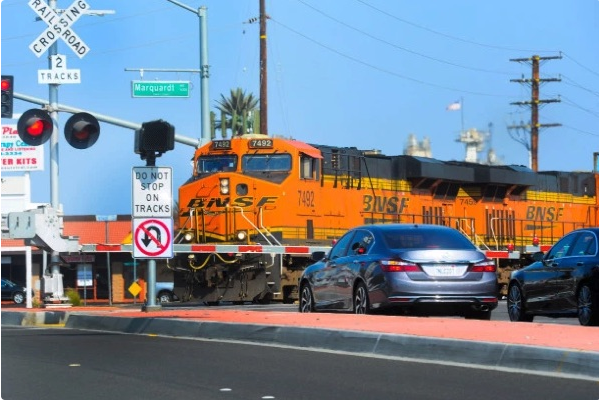
- a. Speed up and cross before the gates lower completely.
- b. Stop and wait; never drive around the gates.
- c. Look both ways, and if safe, drive around the gates to cross the tracks.
- d. The gates are clearly malfunctioning; contact personnel for repair.
21. If a driver aged 21 or older is found to have a blood alcohol concentration (BAC) of ____ or higher, they will face DUI charges.
- a. 0.08%
- b. 0.10%
- c. 0.05%
- d. 0.01%
22. Which of the following locations allows you to park legally?
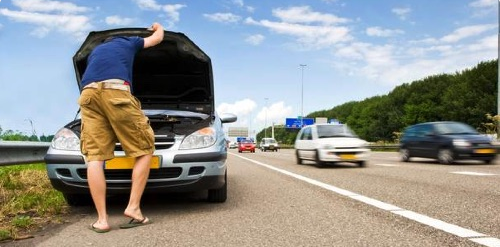
- a. On the shoulder of a freeway (in emergencies).
- b. In a crosswalk.
- c. On a school playground.
- d. On the edge of any highway (only on holidays).
23. Should you slow down when turning?
- a. Yes, it’s best to slow down before entering the turn.
- b. Yes, it’s best to slow down after entering the turn.
- c. Yes, you should slow down throughout the entire turn.
- d. No, if it’s a high-end car, it’s not necessary.
24. According to California law, if you are involved in a traffic accident resulting in injury, you must file a written report with which of the following?
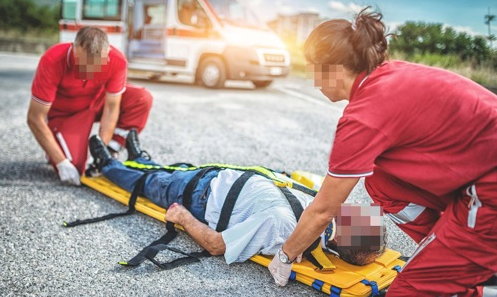
- a. The police department having jurisdiction over the road where it occurred.
- b. The California Highway Patrol (CHP).
- c. The California Department of Motor Vehicles (DMV).
- d. Your insurance company.
25. When you approach an intersection and the traffic signal is solid yellow, what should you do?
- a. Speed up to get through the intersection.
- b. Stop immediately, then proceed after confirming it’s safe.
- c. Slow down and proceed with extra caution.
- d. The intersection is closed; you must detour.
26. Under which of the following conditions should you maintain a greater following distance from the vehicle ahead?
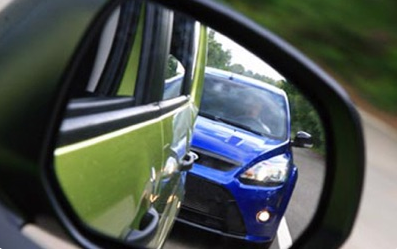
- a. The vehicle ahead is a small car.
- b. A vehicle is closely following you from behind.
- c. The vehicle ahead is driving very slowly.
- d. The vehicle ahead is a large truck.
27. Under what circumstances can you be fined $1000 and jailed for 6 months?
- a. Making a U-turn in the middle of the road.
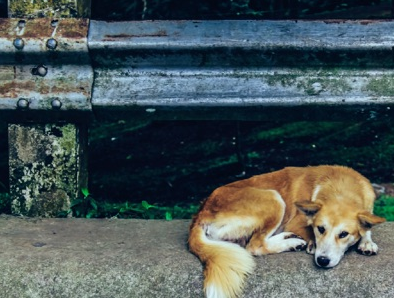
- b. Abandoning an animal on a highway.
- c. Parking in a bicycle lane.
- d. Speeding.
28. According to California law, in which of the following situations can you NOT leave a child aged 6 or younger alone in a car?
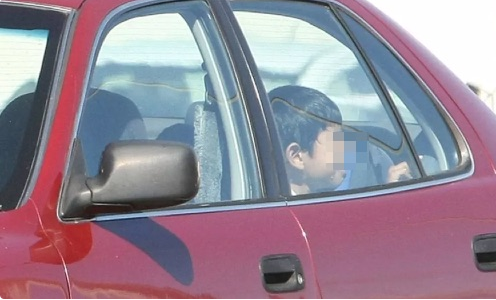
- a. When there is another sibling aged 12 or older in the car with the child.
- b. When the keys are left in the ignition.
- c. When the weather outside is cold and all windows are closed.
- d. In a parking lot at night.
29. As shown, this sign means:
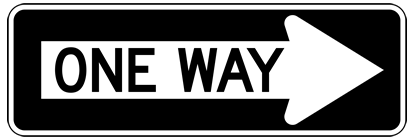
- a. One-way traffic keeps right.
- b. Single lane keeps right.
- c. All vehicles must turn right ahead.
- d. All vehicles must turn left ahead.
30. When encountering heavy fog or dust storms, how should you respond?
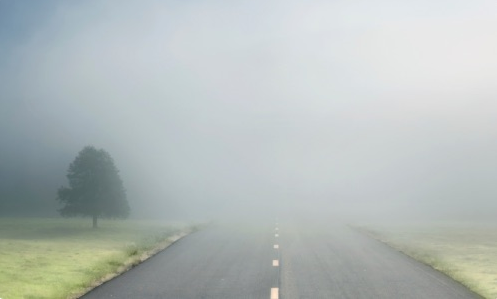
- a. It’s best not to drive at all; wait for the weather to improve.
- b. Drive faster to avoid being hit from behind.
- c. Use high beams to see the road better.
- d. Sound your horn occasionally to alert other drivers to your presence.
31. If a railroad crossing has multiple tracks, what should you pay attention to when crossing?
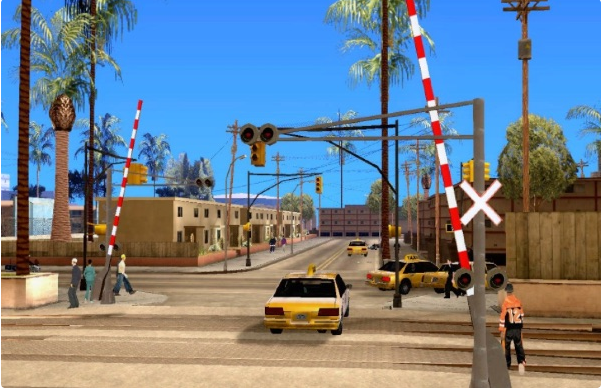
- a. Always look both ways and make sure no trains are approaching from either direction before proceeding.
- b. You can go as soon as one train has passed.
- c. If other vehicles start moving, you can go too.
- d. Accelerate when crossing the railroad tracks.
32. As shown, this sign means:
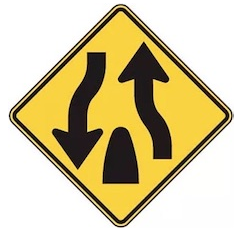
- a. Divided roadway ends ahead.
- b. The road divides ahead.
- c. There is an obstacle on the road ahead.
- d. There is a traffic signal ahead.
33. You are in the left lane of a two-lane road (in your direction). A vehicle behind you is driving very fast and tailgating you. For safety, what should you do?
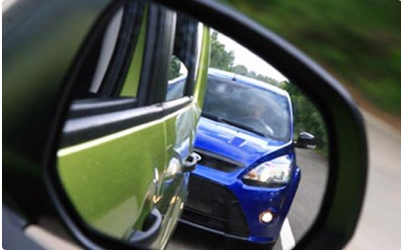
- a. Stay in the left lane and maintain your speed.
- b. Tap your brakes occasionally to warn the driver behind.
- c. If possible, move into the right lane to let the other vehicle pass.
- d. Slow down and increase your following distance from the vehicle ahead.
34. What is the purpose of a solid yellow line on the road surface?
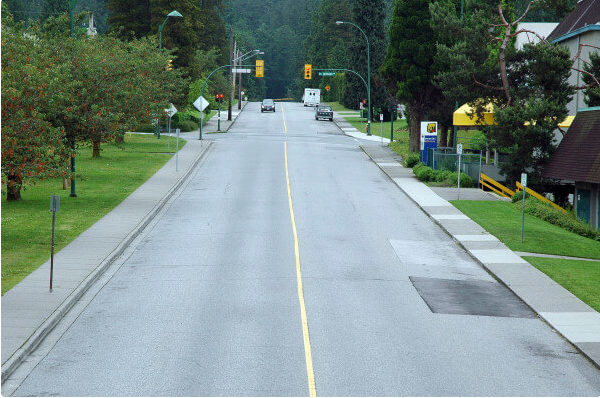
- a. To separate multiple lanes of traffic moving in the same direction on a one-way street.
- b. To separate opposing lanes of traffic on a two-way street.
- c. To separate a regular lane from a carpool (HOV) lane.
- d. To separate a bicycle lane from a vehicle lane.
35. You are in a lane designated for a left turn and see the sign shown. What should you do?
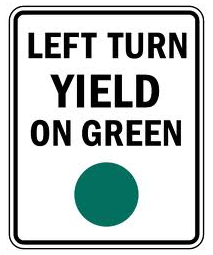
- a. You may turn left only on a green light.
- b. Even on a green light, you must yield to other traffic and pedestrians before turning.
- c. You may not turn left on a green light.
- d. You may not turn right on a green light.
36. Under which of the following conditions should you pump your brakes to flash your brake lights or turn on your hazard lights (flashers)?
- a. You want to warn other drivers of an accident ahead.
- b. You are about to make a temporary stop.
- c. You are preparing to back up.
- d. Your vehicle has low tire pressure.
37. A red arrow signal pointing to the right means:
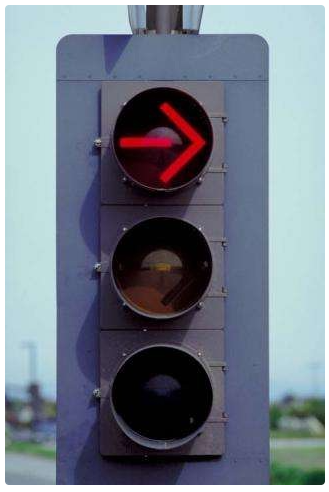
- a. You may turn right after yielding, if safe.
- b. No right turn is allowed while the red arrow is displayed.
- c. Stop, then proceed with the turn after observation.
- d. Construction ahead; turn right at this intersection to detour.
38. If you must park on a two-way graded road (with a slope) and there is no curb, what should you pay attention to?
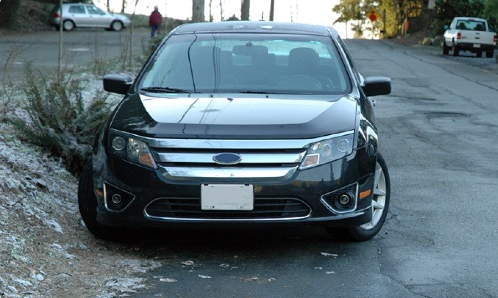
- a. Turn your front wheels to the left, away from the road edge.
- b. Tilt the vehicle slightly so the rear wheels are closer to the road edge.
- c. Turn your front wheels to the right, towards the road edge.
- d. Park with the wheels on the side of the road edge off the pavement.
39. In winter, which type of road is most likely to have hidden ice?
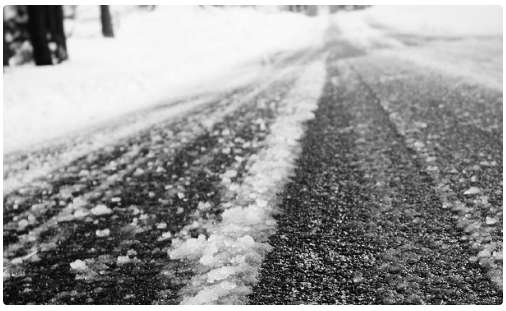
- a. Roads near the top of a hill.
- b. Roads paved with asphalt.
- c. Bridges and overpasses.
- d. Roads with unpaved surfaces.
40. Under what circumstances can you drive off the paved road to pass on the shoulder?
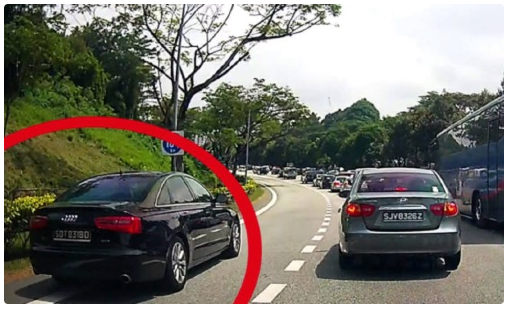
- a. When the vehicle ahead is making a left turn.
- b. When there are two or more lanes in your direction.
- c. It is never allowed under any circumstances.
- d. At night when traffic is light.
41. Why should you keep your turn signal on throughout a turn?
- a. Because it’s the law.
- b. It informs other drivers of your intention, making it safer.
- c. It extends the life of the turn signal bulb.
- d. Because once activated, the turn signal cannot be turned off until the turn is complete.
42. You are stopped at an intersection waiting for a red light. A pedestrian ignores the “Don’t Walk” signal and starts crossing. Just then, the light turns green. What should you do?
- a. Proceed very slowly, being careful not to hit the pedestrian.
- b. Wait until the pedestrian has cleared the intersection before proceeding.
- c. Sound your horn to warn the pedestrian, then proceed slowly through the intersection.
- d. Speed up to get through the intersection before the pedestrian.
43. When is it necessary to use a safety belt?
- a. Only when riding in a recreational vehicle (RV).
- b. Only when driving on a freeway.
- c. Whenever you are in a moving motor vehicle.
- d. Only when driving a large truck.
44. A “Safety Zone” is a special area for passengers to board or exit buses or streetcars. When can you drive through a Safety Zone?
- a. When no bus or streetcar is using the Safety Zone.
- b. When no passengers are boarding or alighting.
- c. As a driver, you must never drive through a Safety Zone at any time or for any reason.
- d. When it is not rush hour.
45. When driving, you must watch for bicyclists on the roadway because:
- a. They do not obey traffic rules.
- b. They have the right-of-way.
- c. They have the right to share the road with motor vehicles.
- d. They are slow-moving.
46. When should you check traffic using your mirrors?
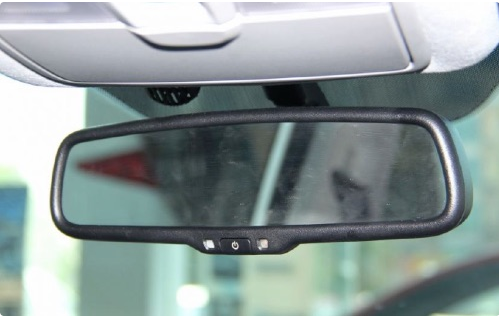
- a. When backing up, making a sharp turn, or approaching an intersection.
- b. When backing up, changing lanes, or preparing to slow down quickly.
- c. When changing lanes, crossing an intersection, or preparing to slow down quickly.
- d. When turning, parking, or preparing to pass.
47. Which of the following statements is correct?
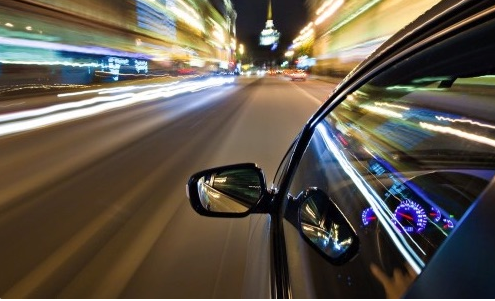
- a. There is no minimum speed limit on California highways.
- b. The faster you drive, the harder it is to control your vehicle.
- c. You can be fined for passing at excessive speeds.
- d. California law prohibits large trucks from entering freeways between 5 AM and 7 AM.
48. Unless otherwise posted, what is the speed limit in a school zone?
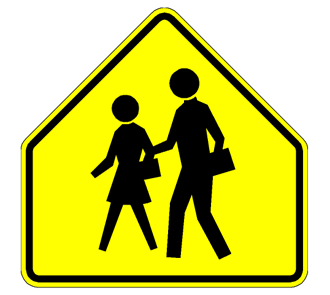
- a. 15 mph
- b. 20 mph
- c. 25 mph
- d. 30 mph
49. As shown, vehicles A and B arrive at an uncontrolled intersection (no signs or signals) at about the same time. Who should go first?
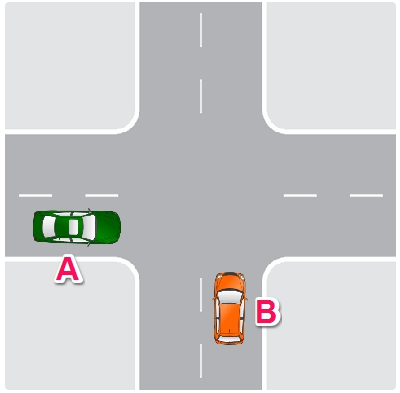
- a. Vehicle A
- b. Vehicle B
- c. The vehicle that signals first.
- d. The vehicle that is turning.
50. Which is the公认的最佳 (generally recognized best) way to improve urban traffic conditions?
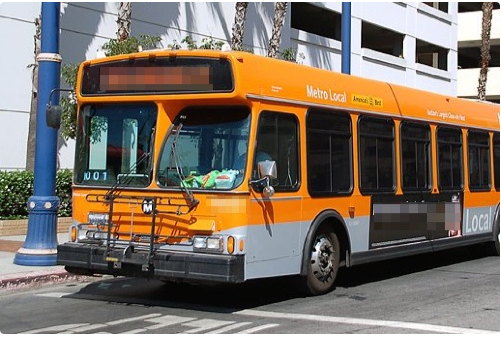
- a. Eliminate speed limits on highways.
- b. Promote and develop public transportation.
- c. Ban non-local vehicles from entering the city.
- d. Increase the gasoline tax.
转载请注明:美国加州驾照笔试题库 » Latest California Driver’s License Written Test Questions (1-50)