1. What should you do when driving through a construction zone?
- a) Slow down and watch out for workers on the road.
- b) Honk the horn to alert nearby pedestrians and vehicles.
- c) Stay focused and drive carefully.
- d) Speed through to avoid interfering with workers’ operations.
Correct Answer: c
2. How should you handle a bicycle lane when making a right turn?
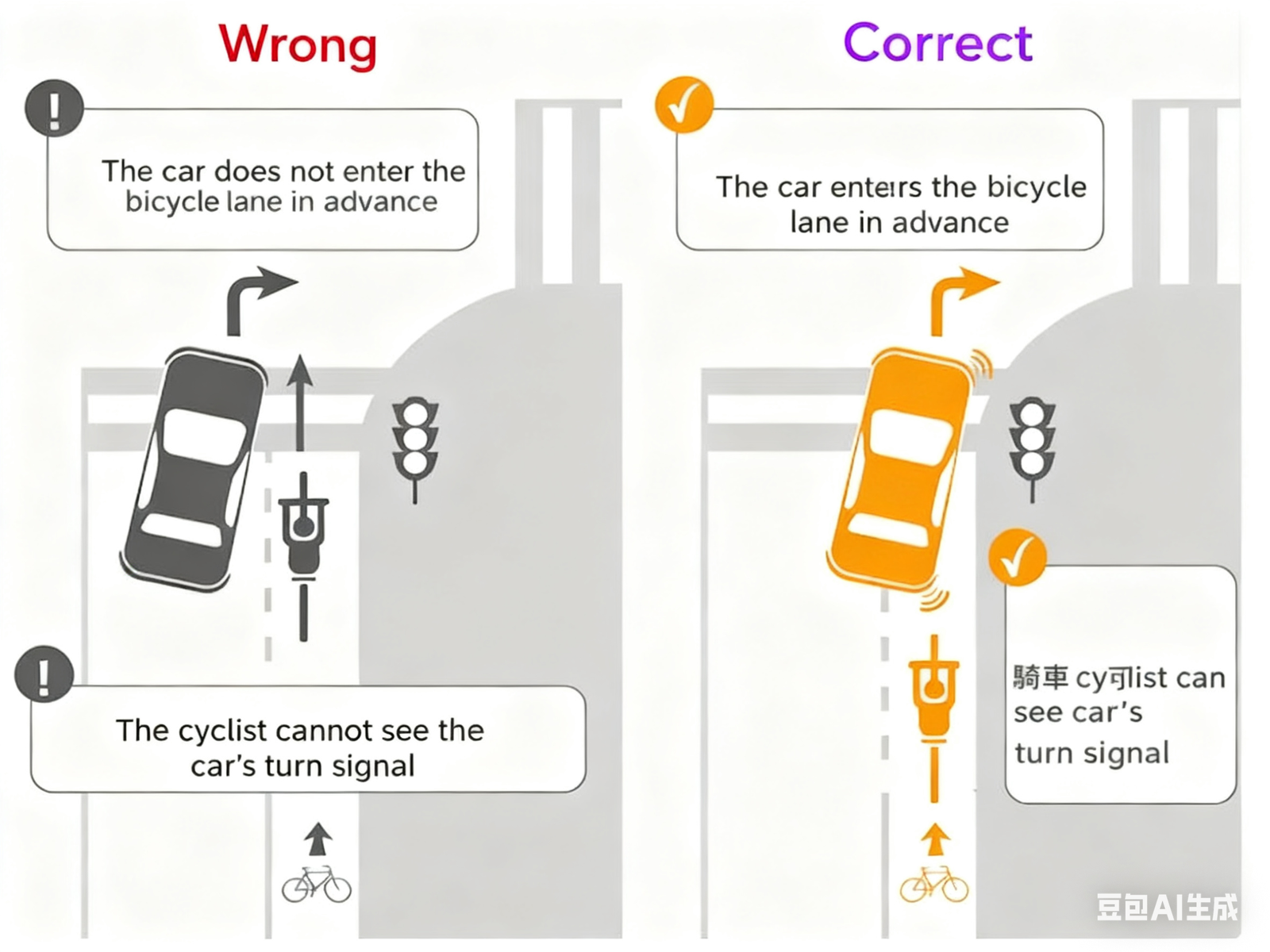
- a) Never enter the bicycle lane.
- b) Stop first before turning, then enter the bicycle lane after ensuring safety.
- c) Enter the bicycle lane in advance before making the turn.
- d) Honk to remind pedestrians near the intersection first, then make the turn.
Correct Answer: c
3. What should you do as a driver if the traffic signal at an intersection malfunctions?
- a) First, stop when arriving at the intersection, then proceed after ensuring safety.
- b) If your vehicle arrives at the intersection first, you have the right of way to pass.
- c) Just slow down; no need to stop.
- d) Take a detour to avoid the intersection.
Correct Answer: a
4. You are driving normally and notice a pedestrian crossing the lane without using a crosswalk. What should you do?
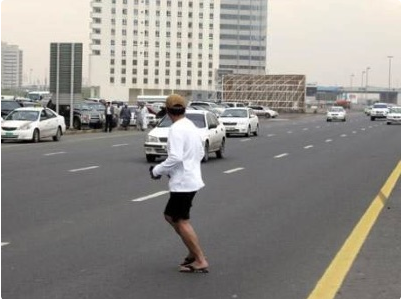
- a) Honk to warn the pedestrian and continue driving.
- b) Carefully drive past the pedestrian.
- c) Change lanes and speed past the pedestrian.
- d) Stop and wait for the pedestrian to cross first.
Correct Answer: d
5. When should you fasten your seatbelt?
- a) When the road is rough and the vehicle is bumpy.
- b) Only when driving a luxury vehicle worth more than $50,000.
- c) At all times, as long as the vehicle is equipped with seatbelts.
- d) Only when there are police patrol cars nearby.
Correct Answer: c
6. When do you need to maintain a sufficient distance from a large truck?
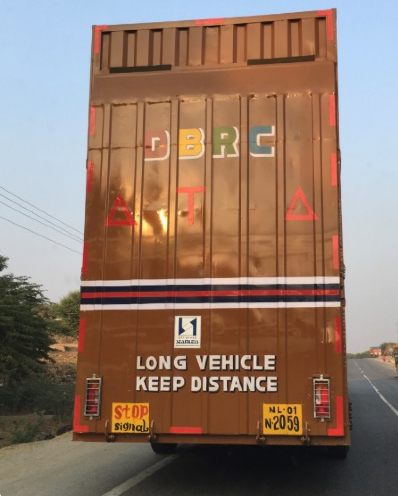
- a) When you notice other vehicles trying to change lanes.
- b) When you notice the truck is about to stop.
- c) When you notice vehicles in the adjacent lane trying to overtake.
- d) When you notice vehicles in the adjacent lane trying to park.
Correct Answer: b
7. What should drivers pay attention to when the road is slippery on rainy days?
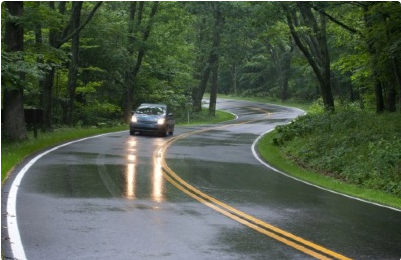
- a) Honk from time to time to remind pedestrians on the road to be careful.
- b) Try to avoid sharp turns and sudden braking.
- c) Pay attention to replacing old tires to avoid insufficient grip.
- d) Do not keep too far a distance from the vehicle in front.
Correct Answer: b
8. Which of the following situations is likely to cause a traffic accident?
- a) All vehicles on the road are traveling at similar speeds.
- b) Vehicles in the fast lane are moving quickly.
- c) Individual vehicles are traveling too fast or too slow.
- d) There are multiple large trucks in the traffic flow.
Correct Answer: c
9. Your vehicle was initially parked by the roadside. What should you pay attention to when you want to drive away?
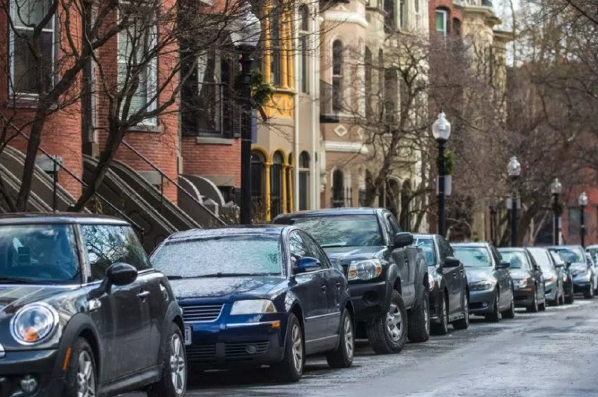
- a) Do not drive too fast for the first 200 meters after starting.
- b) Find the right time and space to merge into the traffic flow at an appropriate speed.
- c) Must honk to remind other vehicles.
- d) Wave your hand out the window to remind other vehicles.
Correct Answer: b
10. After overtaking, how can you determine if it is safe to switch back to your original lane?
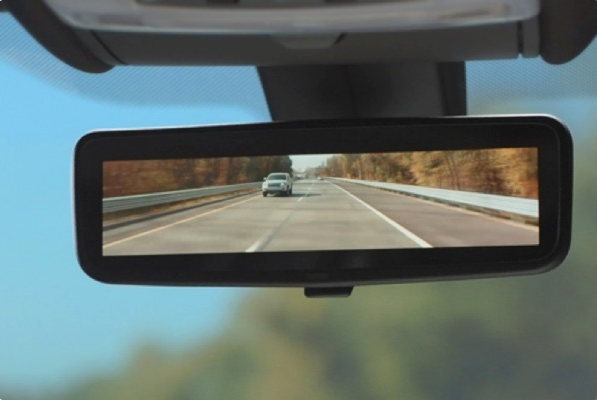
- a) Check the side mirror; if the overtaken vehicle is not visible in the mirror, it is safe.
- b) Check the rearview mirror; if both headlights of the overtaken vehicle are fully visible in the mirror, it is safe.
- c) It is safe as long as you turn on the turn signal when changing lanes.
- d) It is safe as long as you accelerate when changing lanes.
Correct Answer: b
11. In which of the following situations should you turn off your high beams or dim your headlights?
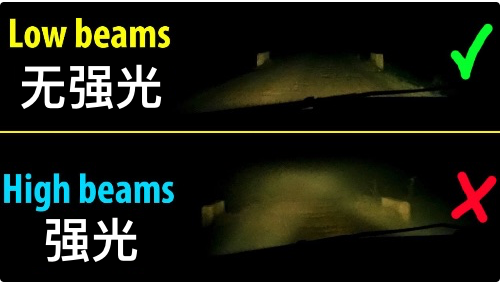
- a) You are following a vehicle at a distance of no more than 300 feet (about 91 meters).
- b) A vehicle is following you at a distance of no more than 300 feet (about 91 meters).
- c) There are other vehicles in the adjacent lane.
- d) Driving on urban roads.
Correct Answer: a
12. If you see the following sign on the road, what should you do?
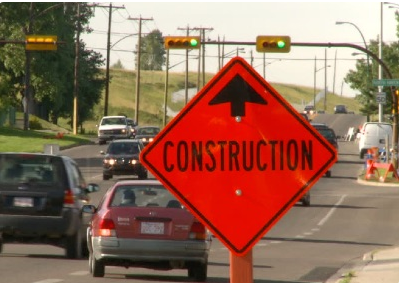
- a) Immediately slow down because the road ends ahead.
- b) There may be workers constructing ahead; be careful to avoid them.
- c) Maintain your speed but switch to another lane.
- d) Immediately stop and make a U-turn to leave the current road section.
Correct Answer: b
13. When can you make a U-turn on a residential street?
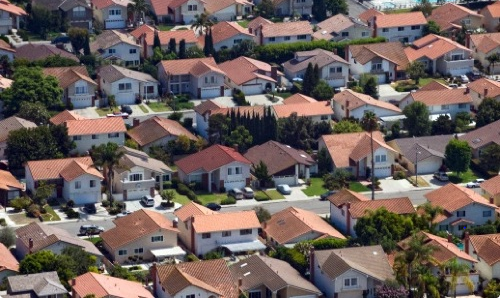
- a) You can never make a U-turn in a residential area.
- b) Only make a U-turn on a one-way street.
- c) You can make a U-turn as long as there are no other vehicles nearby.
- d) Only make a U-turn when there are two solid yellow lines on the road.
Correct Answer: c
14. When do you need to consent to a blood alcohol content test?
- a) When you have actually consumed alcohol.
- b) At all times when you are in California.
- c) When you are involved in a traffic accident.
- d) When encountering a police checkpoint at night.
Correct Answer: b
15. As shown in the figure, when the green signal light with an arrow is on, you should:
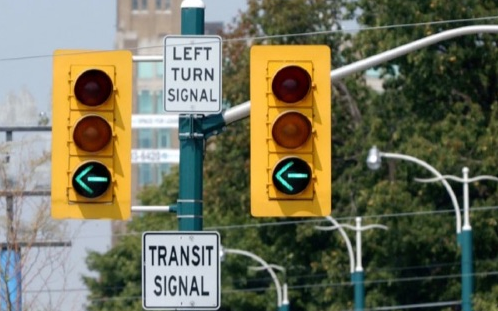
- a) Proceed according to the direction indicated by the signal light, but if other vehicles or pedestrians are in the way, you should yield.
- b) Proceed according to the direction indicated by the signal light, but only yield to pedestrians blocking the way.
- c) Do not proceed first; wait for 4 seconds before moving.
- d) Do not proceed; this signal light is specifically for pedestrians.
Correct Answer: a
16. What should you pay attention to when driving on poorly lit road sections?
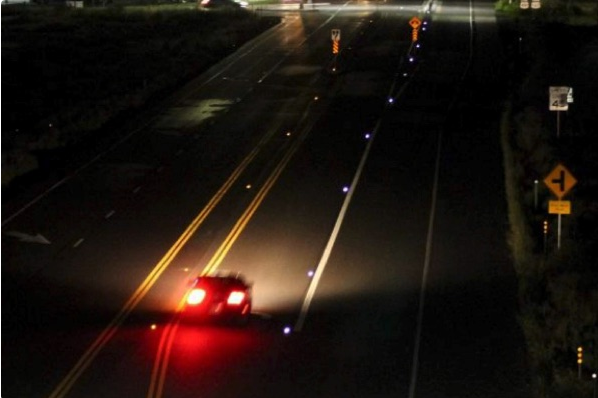
- a) Turn on the emergency flashers so that other drivers can see you.
- b) Reduce your speed to ensure you can stop in time within the range illuminated by your vehicle’s headlights.
- c) Turn on the high beams to clearly see the road ahead.
- d) Turn on the interior lights so that other drivers can see you.
Correct Answer: b
17. If you see a yellow arrow painted on the road while in a lane that only allows right turns, what does it mean?
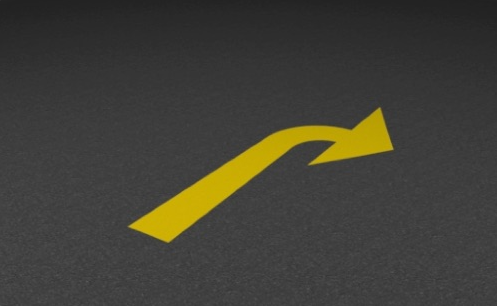
- a) Reminds you to observe and obey the traffic signal lights.
- b) Reminds you to watch for pedestrians when turning.
- c) Reminds you that this lane is closed and you cannot turn.
- d) Reminds you that there is construction ahead; detour as soon as possible after turning.
Correct Answer: a
18. How to yield to emergency vehicles?
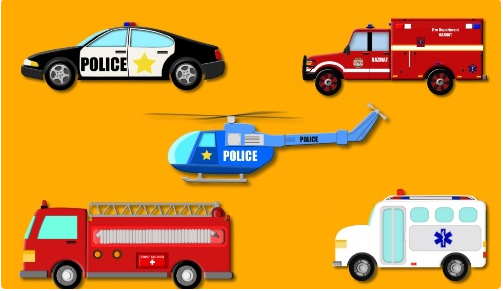
- a) Move your vehicle as close to the right side of the road as possible and stop.
- b) Speed up and turn at the nearest intersection to leave the current lane.
- c) Stop immediately in place.
- d) Slow down immediately until the emergency vehicle passes.
Correct Answer: a
19. Why should you be extra careful of motorcycles when turning?
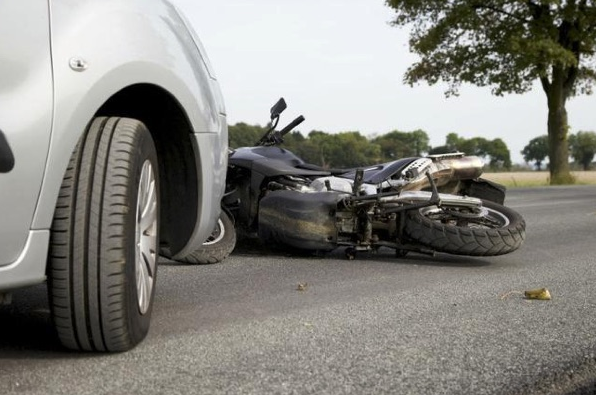
- a) Because they are too fast.
- b) Because they have the right of way when turning.
- c) Because they are small and difficult to spot.
- d) Because they frequently change lanes.
Correct Answer: c
20. When approaching a railroad crossing, you notice the safety barrier is slowly lowering, but the train is still far away from the crossing. What is the correct approach?
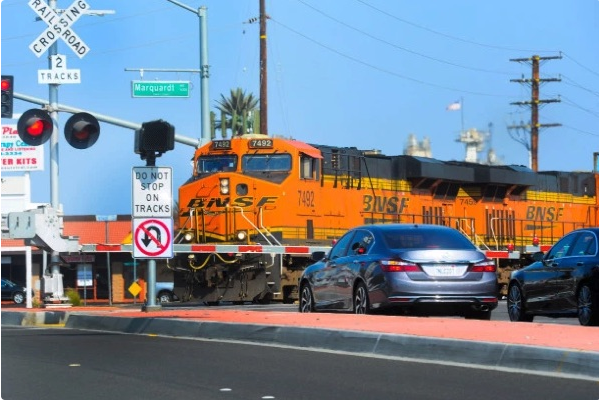
- a) Speed up and pass the intersection before the barrier lowers.
- b) Stop and wait; never cross the barrier.
- c) Look left and right; you can rush through the barrier to cross the railroad if it is safe.
- d) The safety barrier is obviously malfunctioning; you should contact the staff to repair it.
Correct Answer: b
转载请注明:美国加州驾照笔试题库 » California DMV Written Test Questions (1-20)